

BrauBeviale in Milan to tell the future of beverage
The European tour of BrauBeviale stopped in Milan, bringing with it an up-to-date and surprisingly clear picture of the evolution of the Italian beverage sector. This stage was not merely a presentation moment, but a genuine opportunity to listen closely to the industry’s needs.
At the heart of the press conference, held at Tripstillery Portanuova, were data, trends, weak signals, and outlooks that are reshaping the market and anticipating the key themes of the event scheduled to take place in Nuremberg from November 10 to 12.
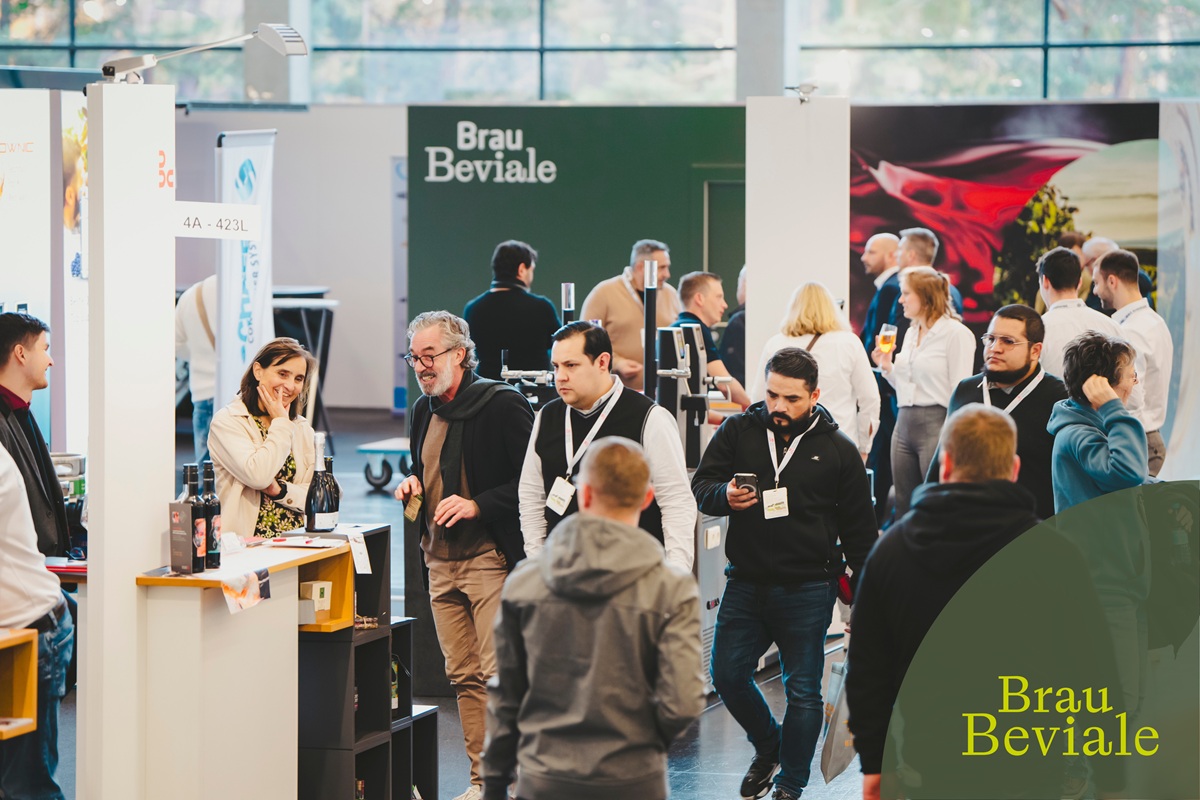
Opening the event was Rolf M. Keller, Managing Director of YONTEX GmbH & Co. KG, the company established through the joint venture between drinktec and BrauBeviale, now acting as the strategic driver behind the exhibition.
Keller outlined a rapidly changing European sector: increasingly conscious consumers, diversified business models, and a growing need for speed and adaptability. In this context, BrauBeviale aims to position itself as a platform for exchange and collaboration, no longer just a trade fair, but a place where the industry can engage with ongoing transformations.
Italy’s figures
The most detailed snapshot was provided by Susanne Blüml, Senior Manager Strategic Portfolio Development at YONTEX, who presented Statista Market Insights data on the Italian beverage market.
The first key takeaway is the strength of the non-alcoholic segment: in 2025, total per capita consumption of non-alcoholic beverages in Italy reaches 229 liters, compared to a European average of 179 liters. This figure places Italy well above the continental average and confirms the central role of this segment.
Within this category, several trends stand out clearly. Mineral water consumption reaches 173 liters per capita in 2025, with expected growth of 6% by 2030. Energy drinks amount to 2.95 liters per capita, with similar projected growth of around 6% by 2030. Ready-to-drink (RTD) beverages, however, show a stagnant trend: 1.1 liters per capita in 2025, a figure expected to remain largely unchanged through 2030.
In the beer segment, Italy shows a distinctive pattern compared to the rest of Europe. Non-alcoholic beer remains a relatively small niche, at 0.2 liters per capita versus a European average of 2.7 liters. Alcoholic beer, on the other hand, maintains a solid position at around 30 liters per capita in 2025. Most notably, it is moving against the broader European trend: by 2030, per capita consumption is expected to grow by more than 10%, while a gradual decline is forecast at European level.
Independent breweries
The outlook for independent European breweries was illustrated through data from the report published by the Independent Brewers of Europe (IBE), presented by Stefan Stang, Managing Director of Private Brauereien Bayern e.V.
The picture is complex, but not without signs of vitality. Four out of ten companies cite economic survival as their top priority, while energy costs remain the main challenge. About half of the breweries expect stagnation or a decline in revenues, and 60% report annual turnover below €500,000.
Despite this, the sector shows a strong willingness to adapt. Around 43% of breweries already produce complementary beverages, mainly soft drinks and lemonades. Seventy-five percent support local initiatives, confirming strong territorial roots, and 28% of production is sold directly to consumers through taprooms, pubs, and shops. At the same time, attention to quality is increasing: 37% of breweries aim to improve their products, while 35% plan to invest in new equipment.
BrauBeviale 2026: a platform for the future
The exhibition will feature a “main stage” dedicated to new consumption habits, non-alcoholic concepts, and production flexibility, with contributions from figures such as Charles Nouwen, who will explore the role of beer between tradition and new consumer behaviors.
The “pilot area” will showcase projects on the circular economy, energy management, and scalable processes, while the “discovery bar” will be devoted to product innovations. The exhibitor database is already online and continuously updated, along with information on the supporting program.
For the packaging sector, the data emerging in Milan are not just consumption indicators. The growth of non-alcoholic beverages, the stability of beer, the search for authenticity and community, and the pressure of energy costs all converge toward a need for tangible, ready-to-implement solutions. BrauBeviale 2026 will be the place where these trajectories take concrete shape.