Riccardo Rosa and Riccardo Cavanna appointed Vice Presidents of Federmacchine
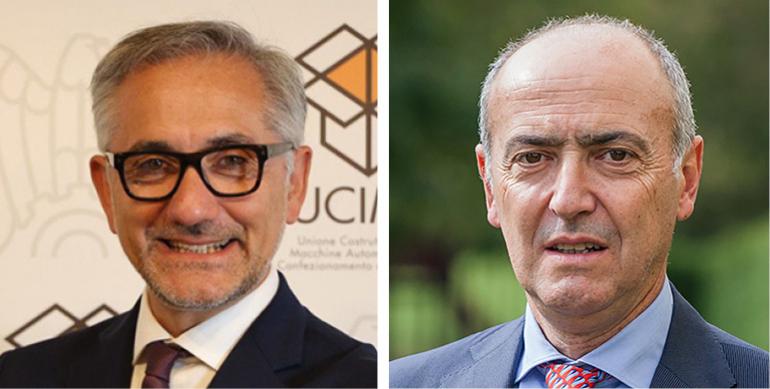
FEDERMACCHINE, the federation of Italian manufacturers of capital goods, which brings together 12 sector associations, announces the appointment of two Vice Presidents: Riccardo Rosa, President of UCIMU-Sistemi per Produrre (Italian machine tool, robots, automation systems and ancillary products manufacturers' association.), and Riccardo Cavanna, President of UCIMA, the association of Italian suppliers of automatic machines and technology for the packaging industries).
The appointments provide an opportunity to further strengthen strategic coordination among the federated associations, consolidating FEDERMACCHINE’s role as a key interlocutor for industrial policy, internationalization, and competitiveness in the capital goods sector.
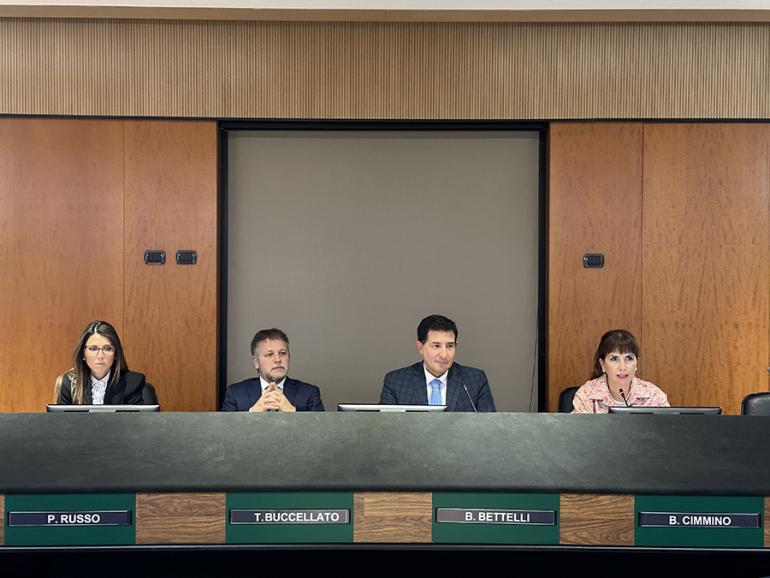
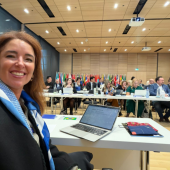
The assignments were approved during the Assembly held at FEDERMACCHINE’s headquarters in Cinisello Balsamo on Friday, February 13. At the end of the Assembly, a public conference titled “ExPAnDere il business: international markets and super-depreciation” was held, providing a platform for discussion between institutions and representatives of the industrial system.
The proceedings were opened by FEDERMACCHINE President Bruno Bettelli, who stated:
Expanding the business’ is not just a slogan, but a strategic necessity. 2025 began with a general contraction of 2%, which also affects incentive tools such as super-depreciation for the domestic market. Imports account for approximately €10 billion, or 37% of the total. We do not want to close markets; we want to ensure consistency between financial instruments and business. Expansion cannot coexist with regulatory uncertainty.
Barbara Cimmino, Vice President of Confindustria with responsibility for Export and Investment Attraction, emphasized the need for renewed momentum in European trade policies:
A stronger push will be needed. The opposition of even a single country can affect the decisions of the European Commission. This is a genuine appeal: the Mercosur agreement represents an acceleration in ongoing free trade processes and is an important signal. If we fail to secure Mercosur, it will be difficult to close other dossiers. The agri-food sector and related industries need free trade areas that facilitate market access. We cannot allow the treaty to be compromised, especially in a context where Brazil is already strongly integrated with China in capital goods. Upcoming priorities include India, Indonesia, and other strategic markets. We must support this expansion with data-driven tools to plan development in international markets. From Italy, we aim to reach over 200 countries worldwide. Today, talking about imports and exports separately no longer makes sense: everything is interconnected.
The Vice President also presented a platform developed by Confindustria’s Study Center and illustrated by Tullio Bucellato. Named ExPand, it has been defined as “the strategic compass for exports”: a tool that allows users to analyze the state of Italian exports by sector, evaluate internal production capacity, identify potential market shares, compare prices for similar products, and much more.
From the Confindustria delegation in Brussels, Simone Massi provided a political and legislative update on agreements with Mercosur and India:
European trade policy is no longer just about market access. The cases of Mercosur and India demonstrate that it is increasingly intertwined with economic security, supply chain resilience, and industrial policy. The real challenge is no longer purely negotiative but political: regarding Mercosur, the game is now being played within European institutions, starting with the provisional application of the treaty by the Commission. Concerning India, the difficulties reflect structural divergences that go far beyond trade.
Connecting from São Paulo, Graziano Messana, President of the Italian Chamber of Commerce in São Paulo, highlighted the favorable moment for Italian machinery exports to Brazil, with growth potential of up to +35%.
Closing the event, Priscilla Russo from the FEDERMACCHINE Secretariat emphasized the importance of super-depreciation as a stimulus for the domestic market and for the competitiveness of the production system.
FEDERMACCHINE thus reaffirms its commitment to supporting the international expansion of Italian capital goods companies, while ensuring regulatory consistency, appropriate financial instruments, and an industrial vision that considers both domestic and global markets.