

Sustainability and food contact packaging: can they go together?
Regulations, technological innovation and scientific research: the food contact community at a conference in Baveno
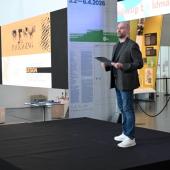
Sustainability and packaging are key words in the packaging world. The two have seen an evolution in their roles over the years, with food safety, waste and attention to the environment undergoing a transition that is not always complementary, highlighting a tendency to radicalise the green components that tends to simplify an extremely complex issue. It is precisely this complexity that was discussed by the professional community of AIBO FCE – the Italian business association of food contact experts – who met in Baveno, on Lake Maggiore, for their annual meeting. A high-profile technical update was proposed by Packaging Meeting and discussed by its president, Ciro Sinagra, Senior R&D Advisor of Laminazione Sottile Group, who with ItaliaImballaggio takes stock of the sector and the association, expressing a hope for an increasingly strong relationship between research and business.
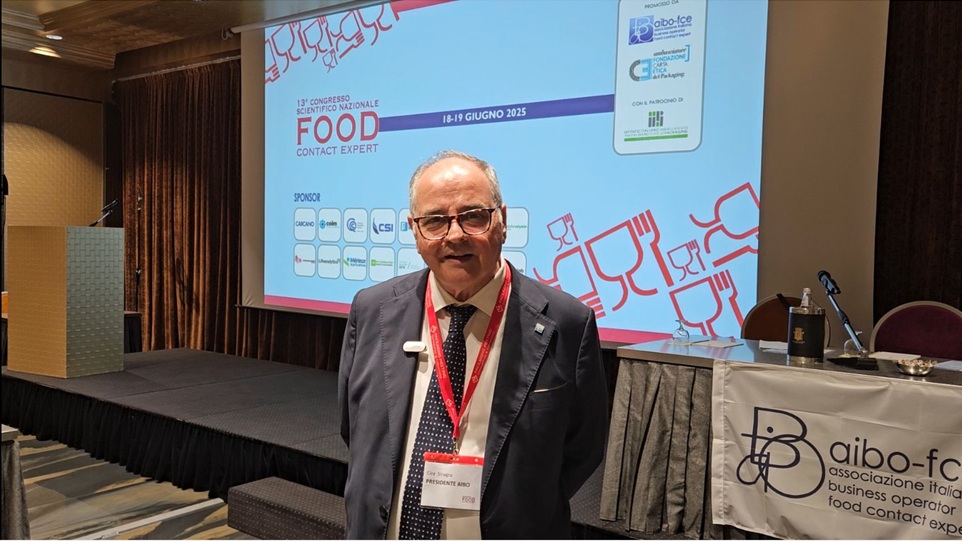
This is an important and well-attended event. Tell us about the association and the goals of your professional community?
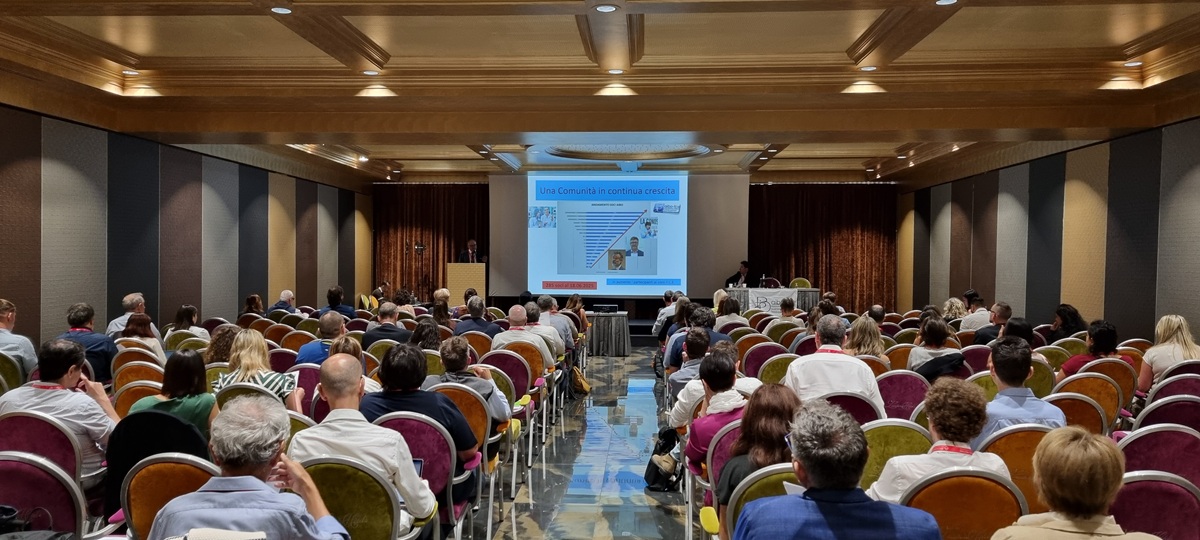
“The 13th national food contact expert conference evidences a strongly growing AIBO,” Sinagra began. “The original 36 participants have now risen to 288 active members, professionals and consultants working in companies operating in the packaging market, constantly seeking advice on a question of key importance for health, food quality, food waste and thus sustainability. The conference saw the participation of 170 experts, who addressed topics ranging from national and European regulations to new innovative materials, as well as recycling to reconcile sustainability with regulation. If we look at the PPWR and food contact packaging, we can see that the two often run parallel and do not always coincide, as it is absolutely necessary for them to do. Think of the key importance of single-use packaging, reuse and recycling, environmental questions that often conflict with the need to protect the food and therefore consumer health.”
Food contact is strategic because of the complexity of the issue and the challenges it presents. What are the prospects for the sector?
“Each of us consumes an average of 700 kg of food per year, using, in various ways, 150 square metres of packaging, the equivalent of a volleyball court. These are food contact surfaces that require constant monitoring of the migration between packaging and food. This requires attention to regulations and the consolidation, or even better the expansion, of the professional figures called upon to deal with regulatory compliance, food safety and quality: this is where AIBO comes in. Our members range from materials manufacturers to the food industry, as well as toxicologists and the consultants companies need for full compliance with national and European regulations. Ours is a highly participative association with a rich member base, boasting advanced skills possessed by people in the company who play a strategic role in food safety, shelf life and sustainability. As regards sustainability, recycling is certainly a key environmental issue; however, the impact of food safety on consumer health and wellbeing must prevail. So, while it is right to give packaging a second life, safety remains paramount. It is interesting to note that there is constant turnover in the association, with the entry of young professionals able to bring about a generational change that we are keen to foster as an association and as long-established professionals in the sector.”
The PPWR is pushing for an increasing presence of recycled materials, with a number of issues still to be resolved regarding machinability and food safety: what developments do you envisage?
“If we think of recycled materials, specific tests have shown that virgin plastic has a neutral impact on human genetics, which is not the case with recycled solutions, on which mutagenic impacts have sometimes been found. This is a question we share with the health and pharmaceutical sector: food packaging has food safety implications that must take precedence over sustainability, thus opening up a reflection on the need to rebalance the role of recycling and reuse and sustainable solutions in general. In short, yes to recycling, but safely first.”
Does the recycling supply chain control have an impact on this process?
“The recycling of plastics, especially closed-loop recycling, is something of a pipe dream, in my opinion. It has been scientifically proven that certain recycling processes cause a change in the physical and mechanical characteristics and molecular weight of plastics. So, it won’t be possible in the immediate future to work on the closed loop process so that a tray can be recycled into a new one; this type of process is only possible with certain products and in supply chains that are able to deploy specific strategies. One example is PET, which is fully recyclable if the content allows it: a bottle containing water can be recycled into a new one, while this is impossible if the bottle has contained a chemical. Other virtuous examples in the closed-loop supply chain are steel and aluminium. Aluminium cans, for instance, are of 75% recycled origin. So here, the closed loop is a reality; it’s feasible because the collection system and the supply chain are able to guarantee the quality of the finished product. Unlike polymers, metals do not lose their chemical-physical and mechanical properties because they belong to the universe of inorganic chemistry. In the world of organic chemistry, on the other hand, it is difficult to imagine a closed loop, while it is possible to envisage a recycling process leading to the production of a second raw material, with destinations other than the original destination. Think of football pitches, or of closures in the construction industry, where recycled plastic can play an important role, continuing its functional path even after several recycling phases. It is with these applications that it is possible to give a second life to non-separated mixed polymer materials or flexible packaging consisting of several layers of materials that are difficult to separate.”
What technical solutions are available today to meet the regulatory requirements?
“The solution lies in chemical recycling, which brings the material back to the single molecule and makes it possible to produce a renewed and perfectly safe second raw material, even if it is recycled. This is certainly one of the key themes of the conference, which looks at the production of packaging free from hazardous substances. It should be emphasised that with the technical advances and new knowledge we did not have in the 1960s when plastics became a market player, it is now possible to detect infinitesimal quantities, in the order of parts per billion. The trend towards sustainability envisioned in an almost ideological sense is set in a context where Europe accounts for 4% of global pollution, while imposing very stringent regulations that represent a glaring contradiction: while laws are enacted in Europe to champion sustainability more than anywhere else in the world, prompted by its fundamental ethical importance for present and future generations, the fact that the sources of pollution are varied and often inadequately monitored on a global scale is often ignored.”
So, what do you think of the over-regulation on the part of the European Union?
“We have come through a period where ideological speculation prevailed, with choices that were not always reasonable. We must reconcile environmental sustainability with economic and social sustainability, which includes business competitiveness and citizens’ health. This must be done not by circumventing sustainability, but by guiding actions with solid scientific research processes: this is the only way to find innovative solutions that go beyond the repetitiveness of our habits. Therefore, R&D and lateral thinking are required, without taking things to extremes, raising expectations regarding innovation, because this is destined to be the key to less impactful materials and new coatings that only the R&D process can discover and bring to light. I am convinced that we must look to nature, which is an inexhaustible source of innovative solutions, even for the packaging of products such as fruit. One thing is sure, however: if we want sustainability tomorrow, we have to make innovative choices today.”
Upcoming events
International Conference on Food Contact Compliance: 12th edition
Baveno, 30 September, 1-2 October
Info: [email protected]