Packaging for bakery products and snacks
Over the years, this sector has undergone a remarkable evolution, successfully keeping pace with new trends and consumer demands. Data from the Unione Italiana Food association referring to the 2024 year-end report
Barbara Iascone
The world of bakery products and snacks is extremely diverse, encompassing foods suited to every moment of the day – from breakfast to dinner, including mid-morning and afternoon snacks. Broadly speaking, we can distinguish two main categories: sweet products and savoury products.
In recent years, this sector has evolved significantly, adapting to ever-changing consumer preferences, which are increasingly attentive and diversified.
One of the most significant challenges recently faced has been the gluten-free production. With the growing prevalence of coeliac disease and other food intolerances, manufacturers have had to rethink their recipes to offer tasty and safe alternatives. The results are now clear: gluten-free versions are available for virtually every type of product, from bread and flatbreads to biscuits, snack cakes, and a wide variety of snacks suitable for all consumers.
Bakery products
The industry segment known simply as Bakery includes industrial bread, bread substitutes (crackers, breadsticks, taralli, etc.), sweet biscuits, rusks, pastries, snack cakes, packaged cakes, and seasonal leavened products.
According to the latest official data from Unione Italiana Food, referencing the 2024 final figures, the sector shows a differentiated performance between production volume and turnover value. In terms of quantity, the sector experienced a slight slowdown, closing the year down by 0.6%, settling at around 1,564 thousand tonnes. In terms of value, however, the sector remained substantially stable, recording an increase of 0.4%, rising from €7,902 million to €7,937 million. This financial outcome reflects the sector’s distinctive focus on differentiation and product specialisation, increasingly featuring innovative and premium products.
The Italian bakery sector continues to stand out as one of the most important segments in the packaged food industry, under several perspectives, certainly in terms of volume and value. Its relevance is further reinforced by its strong performance not only in the domestic market but also in exports. The latter saw growth in 2024, increasing by 11.2% in volume and 13.3% in value.
Sweet goods dominate the market, though growth is slowing
Bakery products can be divided into two main categories: sweet products, which account for 78.1% of the sector, and savoury products, which make up the remaining 21.9%.
Within the bakery world, sweet products continue to dominate: nearly eight out of ten belong to the confectionery category. Leading the ranking are biscuits, which alone cover almost half of the segment (approximately 54.8%), followed by snack cakes at 16.5%. Small-sized pastries – ranging from filled to coated varieties – account for 20.3%, while seasonal leavened products, such as panettone and colomba cakes, close the ranking with 8.4%.
In the savoury baked goods segment, the market picture is simpler but no less significant: industrial packaged bread accounts for 73%, while bread substitutes - such as crackers, breadsticks, and taralli - make up the remaining 27%.
Despite the sector’s overall strength, 2024 closes with slight downturns in both production and turnover. Packaged sweet bakery products recorded a 0.3% drop in production and 0.1% decrease in revenues. The slowdown was even more pronounced for savoury products, which saw a 1% decline in production and a 2.2% fall in turnover.
One figure, however, stands out in this overall scenario: industrial bread. Production in this segment grew slightly, registering +0.6%, even though revenues decreased by 1.2%. Analysts suggest this may signal a rebalancing of average prices and a more selective demand, with consumers increasingly attentive to perceived quality, shelf life, and the nutritional profile of products.
Snacks and crisps
The crisps and snacks sector confirms its leading role within the food industry, closing 2024 with a significant increase in volumes: 150,873 tonnes, up from 147,165 tonnes the previous year. Market value follows the same upward trend, rising from €1,462.5 million to €1,511.3 million.
This result highlights the strength and dynamism of the segment, driven by consistent demand for ready-to-eat products that are convenient and easily accessible. The broadening of product ranges and the widespread presence across both mass retail and out-of-home channels have reinforced the role of crisps and snacks as an everyday choice for consumers, who are increasingly drawn to the combination of flavour, convenience, and immediacy.
Packaging
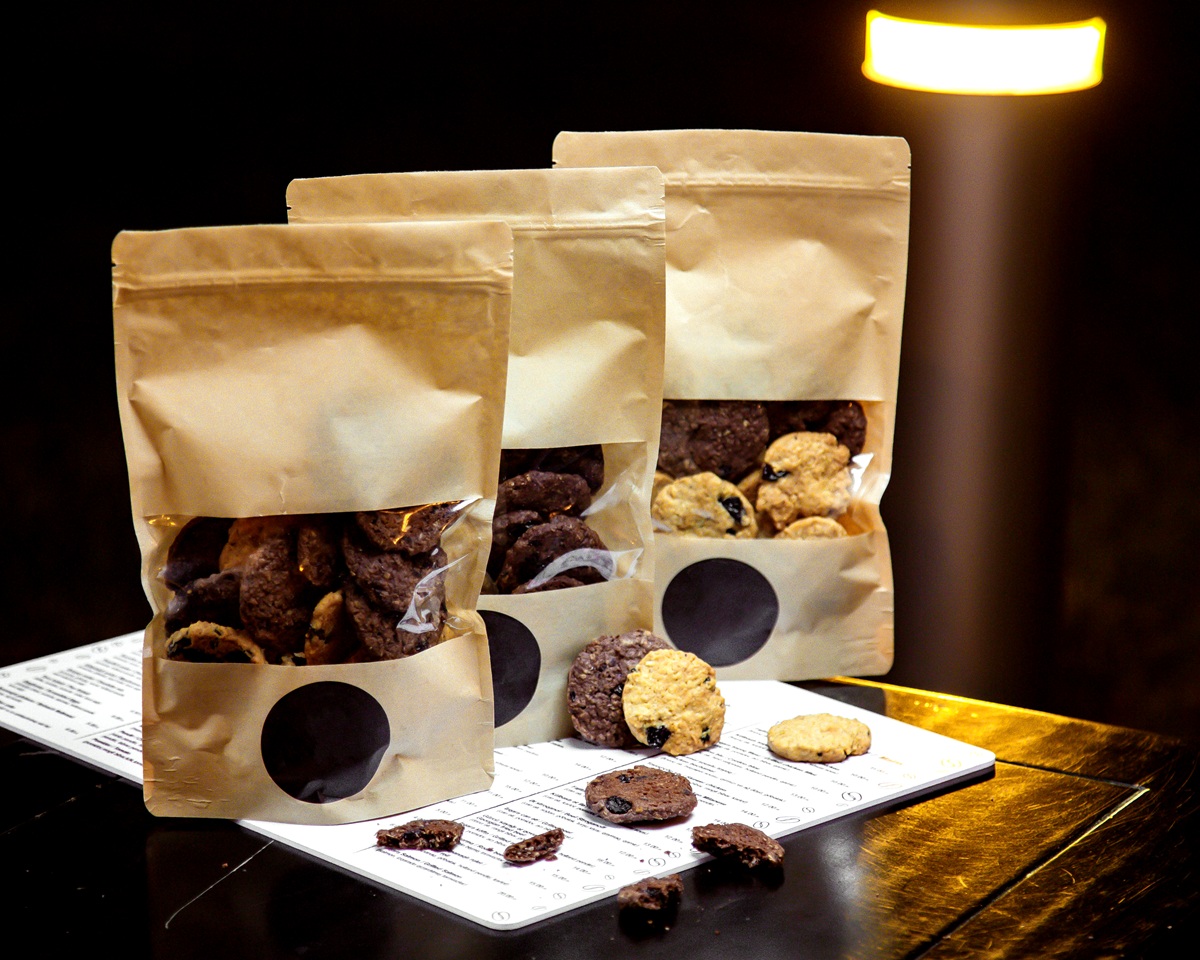
In the bakery and snack sector, flexible laminates packaging continues to dominate, accounting for 97.8% of the market. The key factor in packaging selection is the ability to preserve product freshness, maintaining softness, fragrance, and, in some cases, crispness.
However, quality preservation is not the only concern: environmental sustainability and eco-compatibility now play an increasingly important role. In recent years, the market has seen the emergence of biodegradable and compostable and fully recyclable solutions with a low environmental impact.
In detail, within the biscuits segment, 96% of packaging consists of flexible laminated pouches, primarily paper-based; 2.2% is of plastic bags, and 1.4% of cardboard boxes, while decorative steel boxes account for 0.4%. For other product categories, packaging is almost exclusively based on flexible plastic laminated pouches produced by converters.
Some products, such as snack cakes and crackers, require multiple layers of packaging for distribution purposes. In these cases, a single-serve product is packed in a 20-30 micron PP monofilm plastic wrap, which is then placed in a cardboard multipack, all enclosed in a flexible laminated bag. A similar packaging solution is used for breakfast cereals and snack bars.
In 2024, the sector used approximately 188,200 tonnes of packaging materials in total, including primary, secondary, and transport packaging. About half of these material was destined for export. Primary packaging, which is lighter than secondary and transport packaging, amounted to 30,400 tonnes, highlighting how lightness and efficiency are key factors in packaging management.