From seed counting to film production: JAKA Robotics drives growth and pushes the boundaries of cobot applications
Jaka Robotics continues to strengthen its position. The company has been present on the Italian market for several years. It offers a continuously evolving range of collaborative robots that are increasingly capturing the attention of Italian small and medium-sized enterprises pursuing process automation.
New sectors, previously unfamiliar with robotics, are also emerging, where the introduction of a collaborative robot represents a genuine innovation – among them food processing, catering, and film production, all new entrants in 2026.
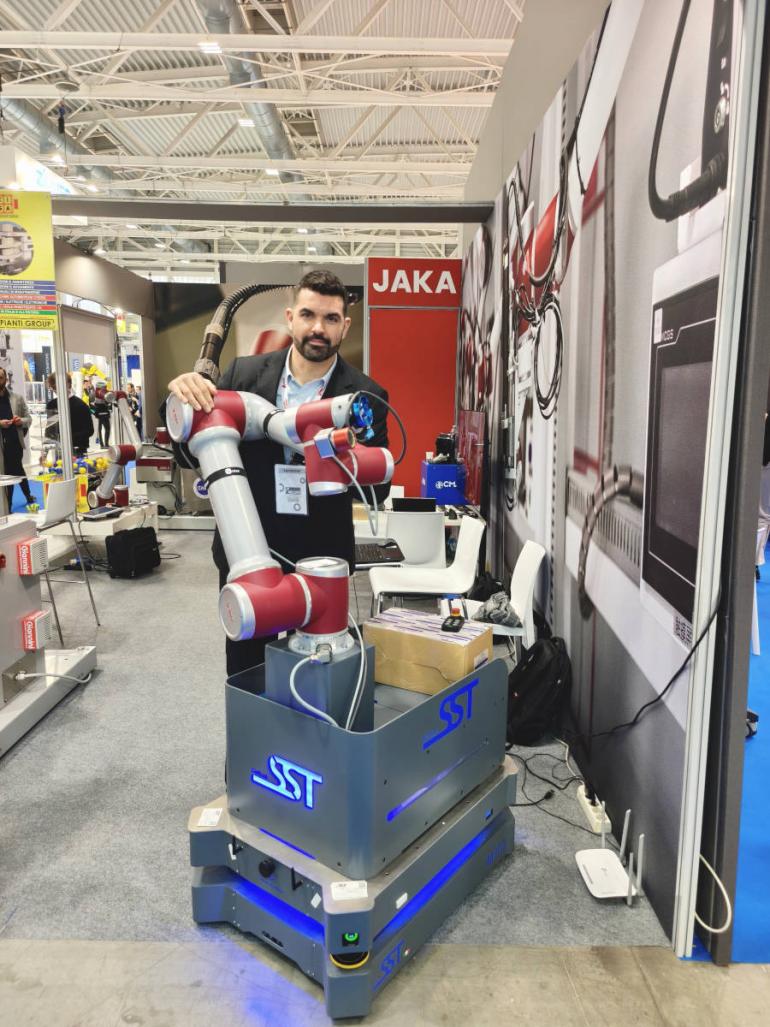
Country Manager Giacomo Mariotti speaks to ItaliaImballaggio.
In today’s challenging environment, how is the market performing for Jaka?
Between the end of 2025 and the first months of 2026, we can report record unit installations and record turnover. There has also been an important development on the HR side, with the addition of Domenico Petrella, an engineer dedicated to remote and on-site technical support, who also contributes to pre-sales and after-sales activities – both of which are fundamental for maintaining constant contact with our customers.
In a contracting market, Jaka is experiencing the opposite trend, even in a difficult period marked by challenges in accessing Industry 5.0 incentives and geopolitical dynamics that have generated significant uncertainty. Although many ongoing projects are experiencing delays in installation and commissioning, overall performance remains extremely positive.
Which strategic directions are you focusing on?
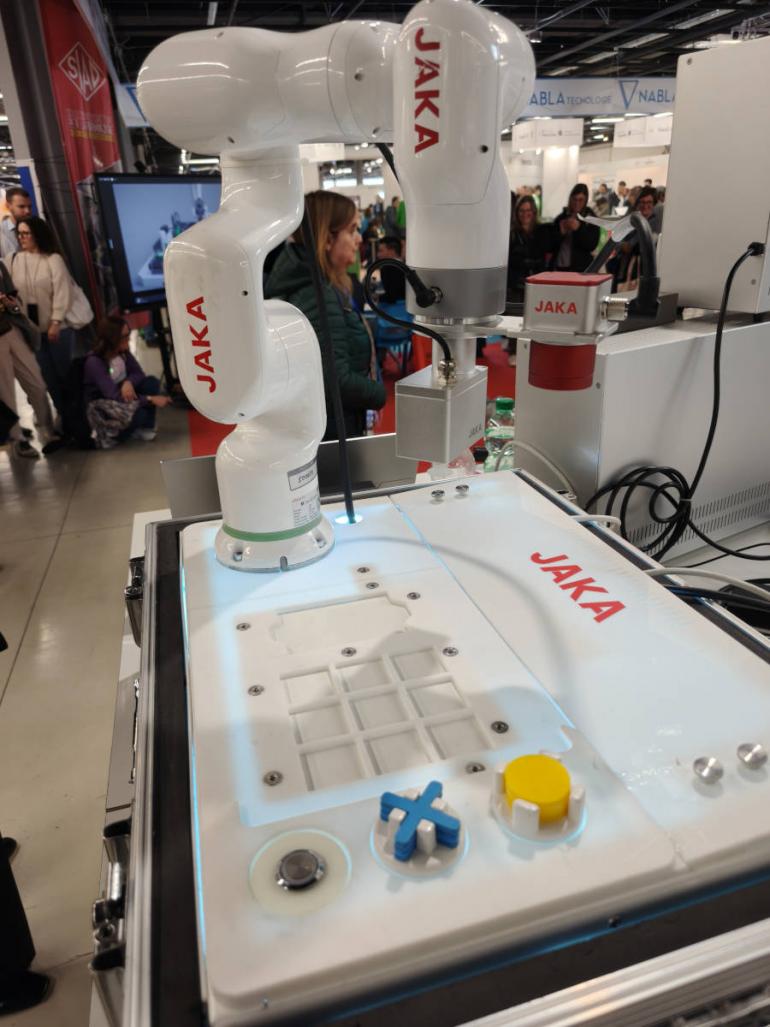
We are working effectively across several channels. The first is product development; the second is a focus on new supply chains that are particularly strong in the Italian market, such as manufacturing, retail and catering. For these sectors, we have consistently offered innovative and distinctive solutions, including our 1 kg payload cobot. These initiatives are further strengthened through our participation in international food and beverage trade fairs such as Cibus Tec and Bevertech. At these fairs, visitors will be able to see robotic bartenders for cocktail preparation, ice cream dispensing into tubs, and kitchen support applications. It is essential to emphasize that Jaka products support human operators by freeing them from repetitive, hazardous, or physically demanding tasks, allowing them to focus on high value-added activities.
Are there any new products planned for 2026?
We are planning to expand our range with three major innovations. We will present a robot with a 35 kg payload and 2-metre reach, capable of linear speeds of up to 5 m/s. It is designed to meet end-of-line requirements, handle heavy loads, and support machine tending applications, including transitions between raw and finished parts. It will be available in Italy from early autumn, with pre-sales opening in June 2026. This is the company’s first robot in this performance class, characterised by a very favourable price-to-performance ratio, specifically targeted at SMEs, which are increasingly inclined towards automation but have more limited access to credit than larger players.
Another key development is the introduction of the K1, a dual-arm robot with synchronised motion and 14 degrees of freedom, designed for R&D applications. It represents a crucial step forward, as it enables testing all scenarios in which two simultaneous arms can make a difference, such as assembly and transfers along the production line. Jaka is therefore investing in AI equipped robots to further improve production efficiency.
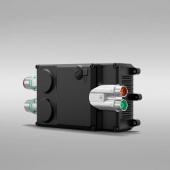
The final major innovation concerns the plastics sector: Euromap 67, a universal adapter that enables automatic connection between the robot and injection moulding machines, eliminating cabling and other integration complexities typical of the sector. It is also worth noting that the Jaka product range is broader than ever, today covering payloads from 1 kg to 35 kg.
How do you support companies investing in Jaka solutions?
We place great emphasis on operational leases and free trial periods, alongside innovative financial solutions such as operating leases in partnership with Grenke. Added to this are preferentially priced robots for partners, with the aim of supporting entrepreneurs throughout the entire process of integrating automation into their operations. The price-to-performance ratio we offer typically enables an ROI within one year, making Jaka a competitive player that brings robotics within reach for businesses of every size. The offering is rounded off by technical support and servicing, complemented by certification pro grammes delivered both in Nuremberg and at partner and customer sites. Jaka currently has ten service partners across Italy, ensuring full coverage across all geographical areas of our market
Jaka is known for its innovative case studies – what’s new on the applications front?
We have three case studies of particular interest in unexpected sectors: fresh produce, film production, and dimensional and quality control.
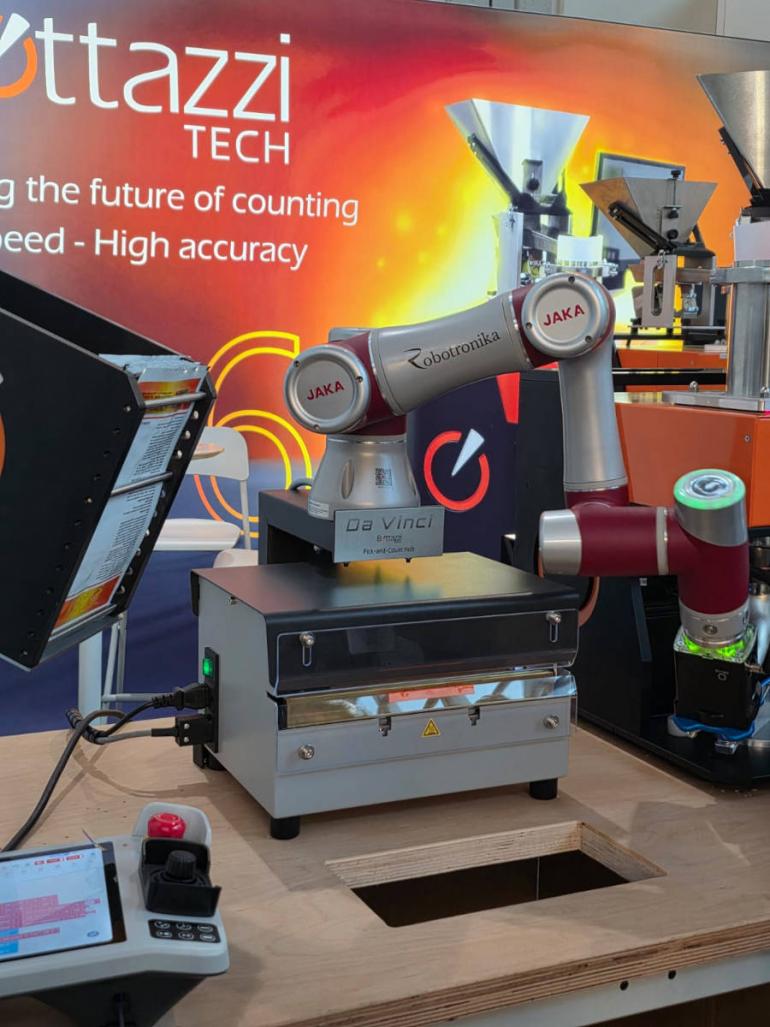
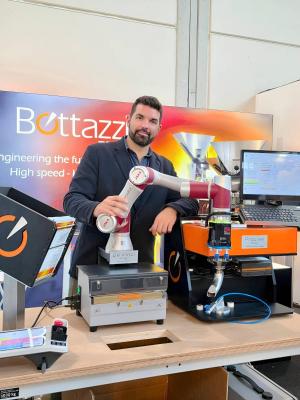
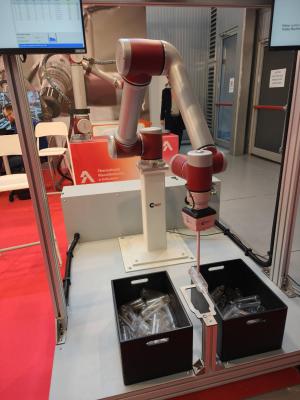
The first, presented at Macfrut in Rimini, is an innovative application in the seed industry that enables the counting and packaging of seeds. The solution, named Da Vinci and developed in collaboration with Botazzi Tech and Robotronika, counts seeds with extreme precision at a rate of 1,200 units per second and 99% accuracy.
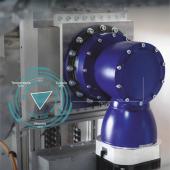
The system is based on a Zu 3 robotic arm that automatically picks up bags from the storage area, places them under the counting unit, then transfers them to the sealing station, and finally to the packaging boxes. Average throughput reaches 2,400 units per day – four times the 600 achieved with traditional methods – all at a highly accessible price point of just over €80,000. The versatility of this solution also allows adaptation to industrial applications involving small components, hardware, mechanical parts, and even diamonds.
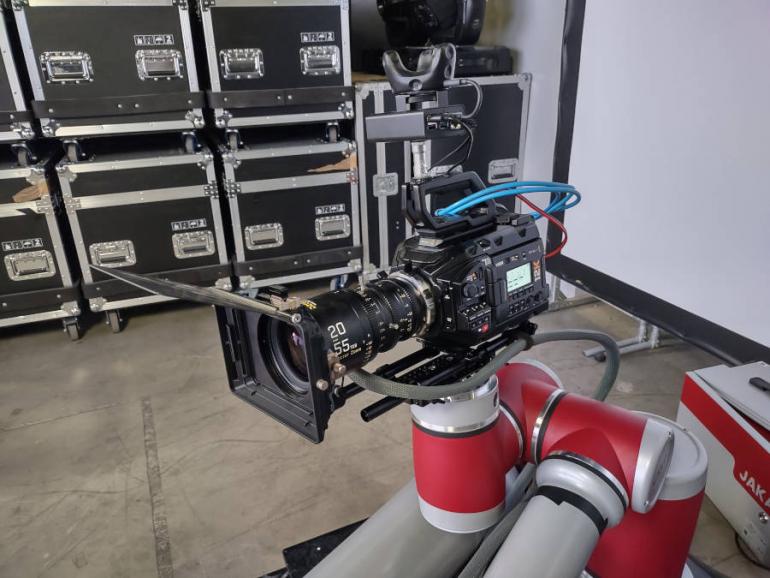
Another noteworthy case, deployed in an unconventional context, was developed for the film industry in collaboration with Protesa (part of the Sacmi Group) and Conkreta Robotics. This is the first use in film production of a cobot with a camera mounted on its flange, enabling re mote management of direction and focus. It also allows real-time visualisation on LED walls and integration with footage from multiple sources – effectively moving beyond the traditional green screen approach. The solution is suitable for cinema, virtual training, technical marketing, and advertising production.
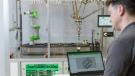
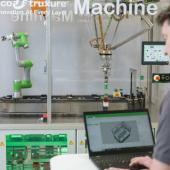
The third application, more industrial in nature, integrates 3D scanning with a Zu 12 robot, transforming it into a mobile 3D scanning station for surfaces, mechanical parts, and components. Thanks to its onboard vision system, the robot generates a precise image based on a point cloud or high-precision 3D scan, useful, for example, for quality control applications. The system effectively turns a 3D CAD model into a mobile, versatile, and robotised solution adaptable to a wide range of environments. In short, efficiency, accuracy, versatility, and adaptability are the defining features of projects that are positioning Jaka Robotics in ever newer markets, with increasingly demanding technical requirements.